Building a Mobile Eye Clinic Through Advocacy, Trust, and Community Partnerships
Share this
When Dr. Rebecca Chown launched Envision EyeCare for All, she started with a mission: bringing eye health and vision services directly into communities that had long gone without them.
Over the last several years, that mission has grown into a mobile, community-centered eye care model serving communities across Oregon through pop-up clinics, trusted partnerships, and grassroots advocacy. Along the way, Envision Eye Care for All has transformed a personal vehicle into a mobile clinic, built relationships with community organizations across the state, and raised funding for a future state-of-the-art mobile unit — one grant at a time.
But for Dr. Chown, the work has always been about more than providing eye exams.
“It’s really about advocating for the inclusion of eye health and vision in the systems that serve our underserved populations,” she said.
We spoke with Dr. Chown about the inspiration behind Envision EyeCare for All, the challenges of building a nonprofit from scratch, and why advocacy is woven into every part of the organization’s work.
Q: What inspired you to start Envision EyeCare?
Dr. Chown:
I have been an optometrist for 23 years, and I’ve worked in every setting you could possibly imagine. I’ve practiced in the military, owned private practices, worked in co-management settings, practiced in academia, and most recently served as the director of outreach for college of optometry, where I ran their mobile vision program.
That experience changed everything for me.
What I knew immediately is that this is where my heart is, providing eye care for underserved communities. It’s the giving back. It’s ensuring that health equity is true for eye health and vision care.
Q: What gaps do you see in eye care access?
Only about 20–25% of federally qualified health centers throughout the U.S. include eye health and vision services. Then I realized something even bigger: eye health and vision access is missing from most community needs assessments or health needs assessments.
The questions aren’t even being asked.
I felt like I was advocating for something I shouldn’t even have to advocate for. The ability to see should not be a privilege; it is a basic human right.
And yet, there are structural gaps throughout the system. Vision care is not included in most Medicare plans, even though medical eye care is covered. That means services like glasses and routine refractions are often not covered, which is especially challenging for people on fixed incomes who may forgo care because they cannot afford eyewear. In Oregon, for example, Medicaid for adults also excludes coverage for glasses.
That reality makes the gap even more urgent.
That’s when I realized we needed data. We needed to show the numbers and demonstrate the need in communities. And that’s what pushed me toward mobile health.
Q: Did you always plan to launch with a mobile clinic?
Originally, yes. In my mind, I couldn’t do anything without a mobile unit because that’s what I had envisioned.
But when I started speaking with philanthropic organizations, one of them said something important: we didn’t yet have the numbers to prove the need.
They basically told me, “Show us that, and we can support you.”
That completely shifted my thinking. I started asking myself: Do I really need a vehicle to begin this work?
Q: How did you start providing care without a mobile unit?
We got creative. Eye care is unique because the eye is such a small organ, and we need a lot of specialized equipment to fully perform a comprehensive eye exam. So I started figuring out how to make everything portable.
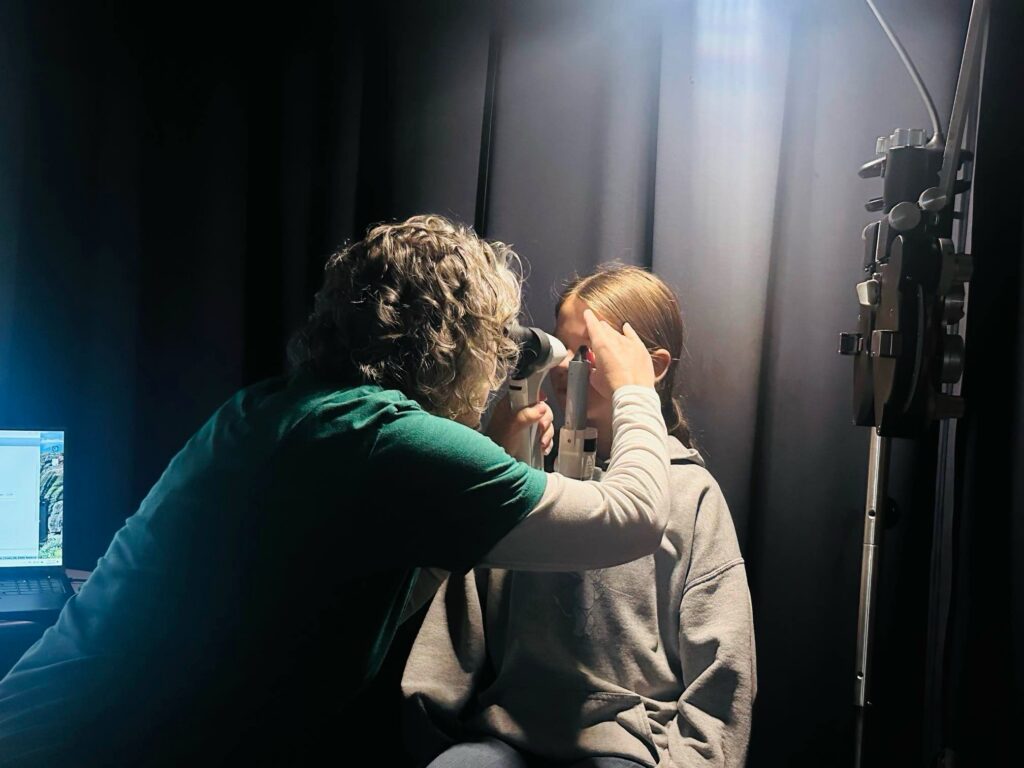
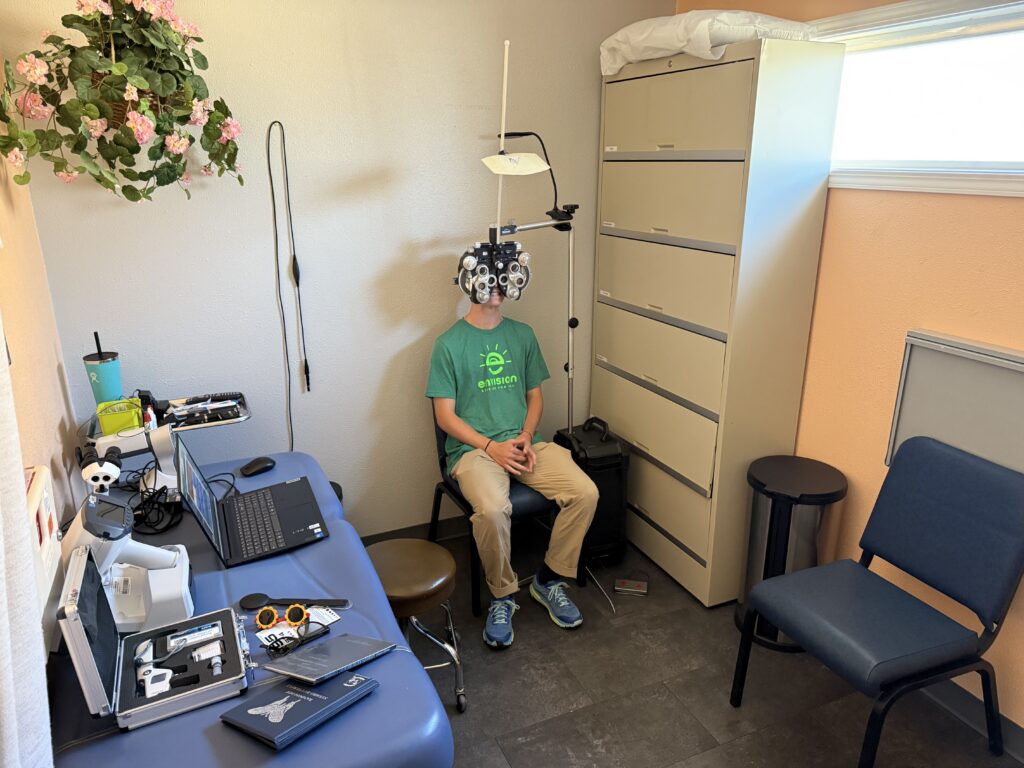
We were able to put all of the equipment into heavy-duty toolboxes and load it into the back of my RAV4. It works very similar to Legos. Every piece needs to fit in a very specific way. From there, we started forming relationships with community partners and building pop-up clinics inside community partner spaces.
Even now, we still carry everything in, set up temporary clinics, and then break everything down at the end of the day.
Q: What changes when you move from your current portable model to a dedicated mobile clinic?
Right now, we’ve been able to make the portable model work because we had to. We didn’t have a choice, and it taught us a lot about what’s possible when you’re committed to showing up for communities and advocating for something you believe in.
But this model is also very resource-intensive. Every time we go into a space, we’re setting everything up from scratch, adapting to different environments, and recalibrating equipment for each setting. That takes time — a lot of time that could otherwise be spent seeing patients.
What the mobile clinic will change is efficiency and reach.
Instead of problem solving in every new environment, we will bring a fully designed clinical space with us. That means we will be able to move more efficiently, see more patients, and reduce setup and breakdown time. It also creates a more standardized care environment, which supports both accuracy, continuity of care and patient experience.
It also expands reach. This current model is dependent on community partnerships providing indoor space. The mobile clinic allows us more flexibility, to go further and show up in places where infrastructure is limited or inconsistent.
Ultimately, a mobile clinic strengthens sustainability. We’ve proven the model works. Now we’re building the infrastructure to make it more efficient, more scalable, and more consistent.
Q: How important have community partnerships been to your model?
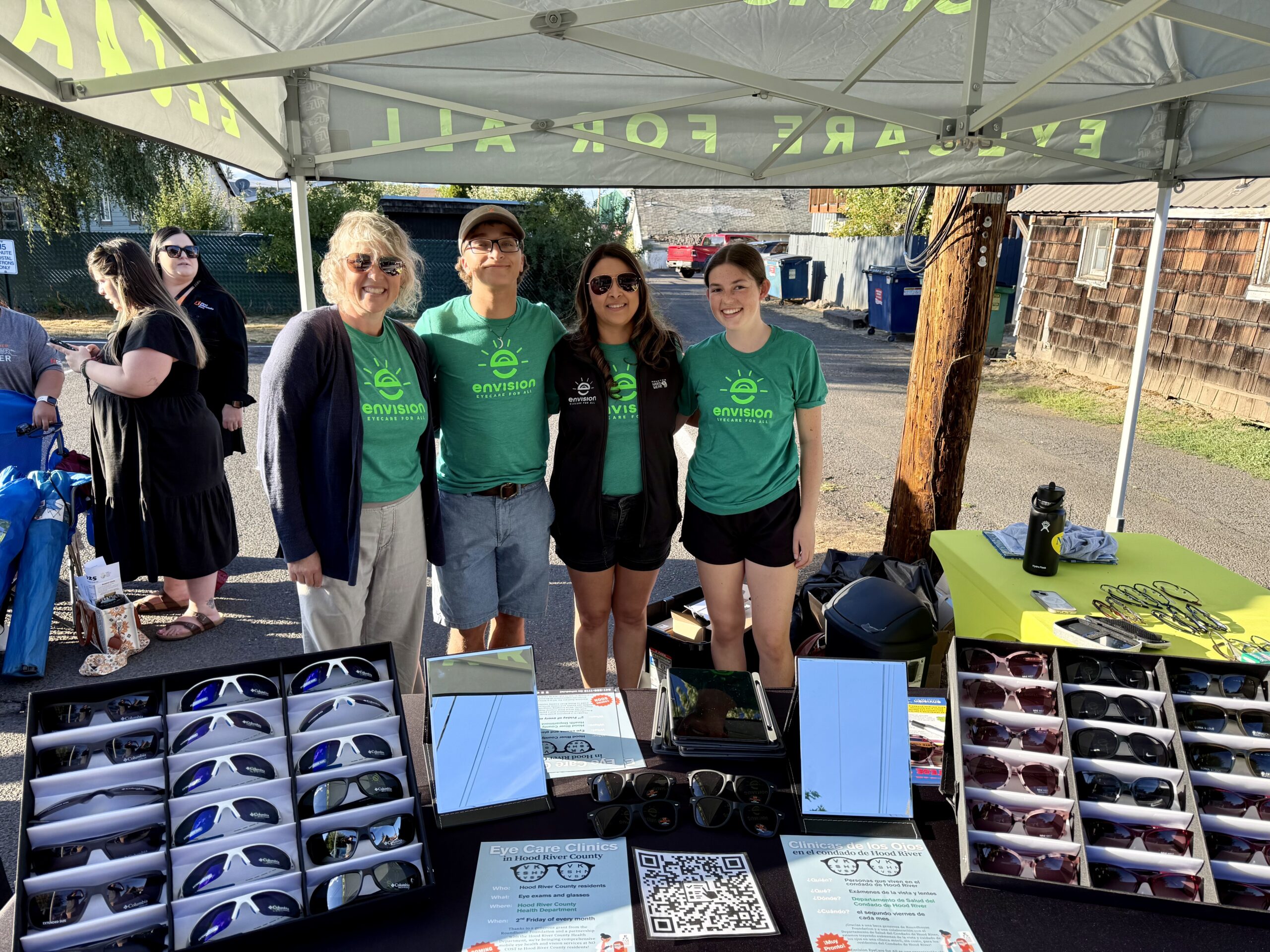
We don’t exist without community partnerships. Everything we’ve done from the very beginning has been in connection with a community partner. Initially, we needed partners because we didn’t have a physical clinic space. But over time, we realized the partnerships were about much more than space.
It was about trust.
For example, the people who come to the Hood River County Health Department already have a base level of trust for that organization. We were able to build our work through those trusted relationships and trust circles that already existed in the community.
Eventually, we learned that having the community partners handle the scheduling works best. They know their community, manage the wait lists and are able to fill in holes if there is a no show.
Handing over the scheduling changed everything. Our schedule generally fills within 24 hours of being open. We are currently booked months out in advance.
Q: Advocacy is a major part of your mission. What does advocacy look like in practice?
Advocacy happens in almost every conversation we have. Every time I apply for a grant, talk with a patient, or set up a new community partner, I have the opportunity to advocate for eye health and vision services for underserved populations.
Every grant application becomes an opportunity to educate foundations about why eye health matters. Every conversation with a community partner is another opportunity to talk about access.
Even when we don’t receive funding, those conversations still matter because they help build awareness and relationships.
Recently, I had the opportunity to meet with a state senator and talk about why eye health services need to be included within the healthcare systems designed for underserved populations. There’s no ask in my letter. It’s really an opportunity to inform.
I think advocacy is about grassroots efforts that build over time. We are still in the building phase.
Q: How are you identifying community needs to inform your work?
Our work is informed by the people we serve, our board representation and community partnerships. One example is our work with Mercado Del Valle, a farmers market serving migrant and seasonal farmworkers and their families.
Last year, we conducted our own community needs assessment at the market, held every other Thursday throughout the summer. We created a seven-question survey to better understand barriers to care and what communities needed most.
In return, participants received support items like reading glasses, eye drops, or high-quality sunglasses, along with educational materials about eye health for agriculture workers. That needs assessment helped inform our program. It helped us better understand how to support the community and what barriers people were facing.
Q: The communities you serve are very different from one another. How has that shaped your work?
It taught us that “underserved” can mean many different things.
In Hood River County, many of our patients are Spanish-speaking agricultural workers. Housing is expensive, wages are limited, and families are often making impossible choices. They’re having to decide whether they put food on the table or have a pair of glasses. For many families, glasses don’t even make the priority list because they’re focused on survival.
But in Gilliam County, the barriers are different. Many residents have insurance and financial stability, but they live hours away from care. It takes them two hours to get to care. For older adults especially, traveling long distances after eye exams can be incredibly difficult. The last thing you want is an 80-year-old being dilated and trying to drive two hours home.
While our mission is always centered on underserved communities, the barriers look very different depending on where we are.
Q: What are you most excited about as the mobile clinic launches?
We completed our fundraising at the start of the year. Our commercial unit is now under construction with an estimated wait time of 12-18 months. We hope to launch the new vehicle in early 2027! But this is not just about one vehicle or one clinic. This is about building a state-of-the-art prototype. I want to create a model that can be replicated in communities throughout the state, even the country. Part of our mission is not only delivering care, but most importantly advocating for the inclusion of eye health and vision services within healthcare systems nationwide.
And we’re proving that this work matters — one community, one partnership, and one relationship at a time.
What Organizations Can Learn From This Work
Envision Eye Care’s model shows that mobile eye health is not just a service delivery approach; it is a way to reveal gaps in access, strengthen trust, and reshape how care reaches communities.
A few key lessons stand out:
- Trust drives access. Community partnerships are not support systems, they are the foundation that makes care possible.
- Mobile care exposes system gaps. Bringing services into communities reveals what traditional systems often miss, from missing vision care to geographic and structural barriers.
- Mobile health increase capacity. Moving from improvised setups to a dedicated mobile clinic increases efficiency, consistency, and reach.
- Community input should guide design. Needs assessments are essential to understanding real barriers and shaping responsive care.
- Advocacy is part of delivery. Every clinic and partnership contributes to a broader effort to elevate eye health within healthcare systems.
Envision Eye Care is part of the 2026 Mobile Health Map Accelerator Program, a national initiative supporting mobile clinics as they strengthen public health in their communities. The program helps teams share lessons, build evaluation capacity, and strengthen their impact in their communities.