How One Public Health Department Is Using a Mobile Clinic to Expand Reach and Connect More People to Care
Share this
In 2025, our ongoing review of mobile health media coverage highlighted a growing number of public health departments across the country launching mobile clinics to reach communities more directly, especially in areas where distance, transportation, and trust remain barriers.
That momentum is reflected in our data. According to our 2025 mobile health landscape report, 14% of mobile clinics nationwide are now operated by government or public health agencies, signaling the growing role mobile care is playing in public health.
For health departments working to expand access and strengthen community connection, this strategy is a proven method to provide trusted care and reach communities that are often overlooked.
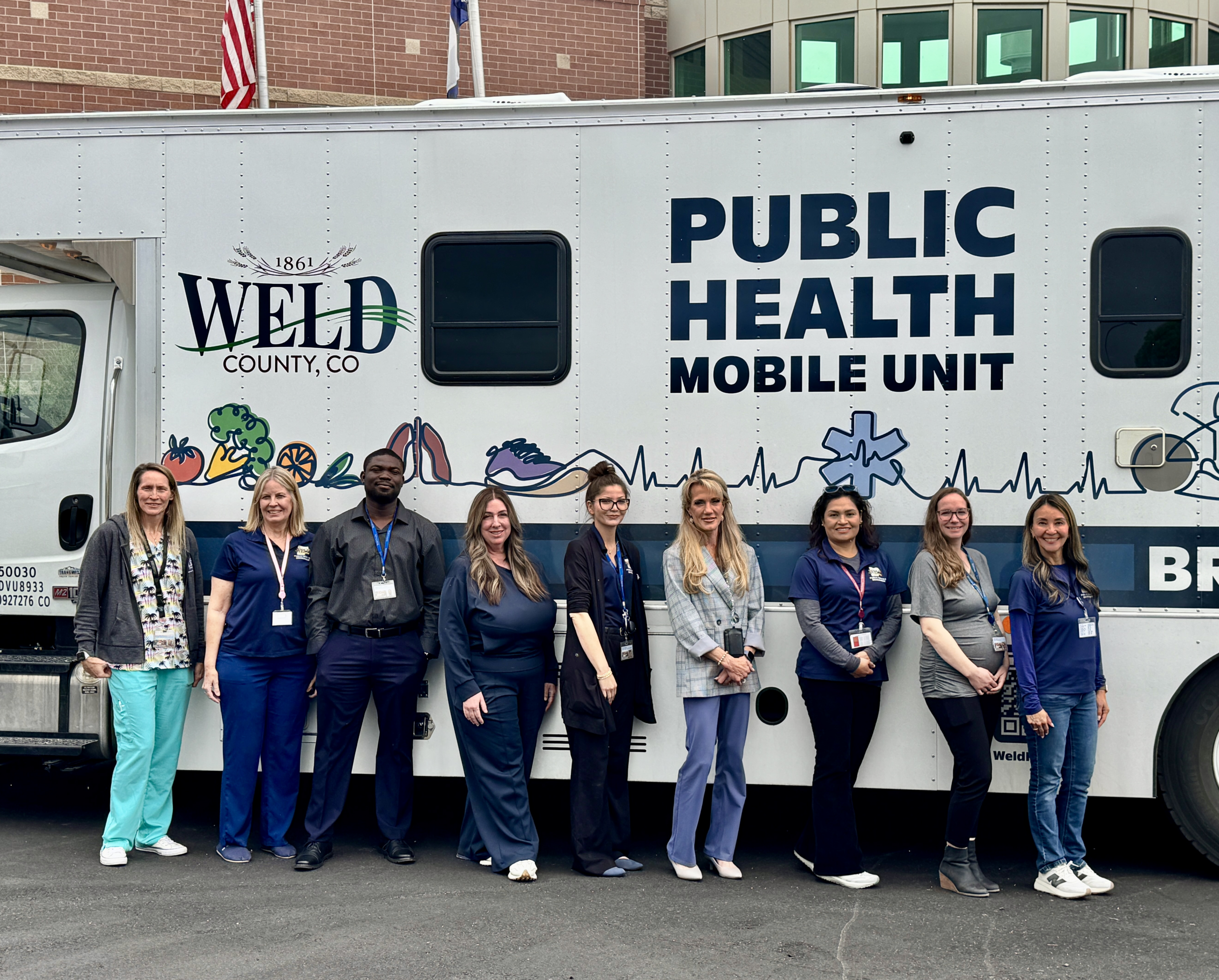
In Weld County, Colorado, a region spanning 4,000 square miles, the health department launched a mobile clinic in 2025 to expand access to care across their communities. Today, the unit delivers immunizations, STI screenings, and preventive health services while connecting residents to a broader network of public health resources.
We spoke with Shanti Sanchez, Clinical Outreach Coordinator and Mobile Unit Coordinator, about what they have learned in their first year building and operating the program.
1. Before launching the mobile clinic, what gaps in access or services was the department trying to address?
Shanti Sanchez:
Access, especially in our rural areas, was the biggest driver. Our county is large, and once you get outside of the main town, transportation becomes a real barrier. There are people who just are not going to make it into a brick-and-mortar clinic, even if they need care.
At the same time, we have known for a while that many people do not fully understand what the health department offers. There is a lack of awareness about services and how to access them.
The mobile unit really serves two purposes. It brings care closer to people, and it acts as an extension of the health department. It gives us a way to show up in the community, start conversations, and connect people to services, even if we are not providing everything right there on the unit.
2. What services do you offer through the mobile clinic?
Shanti Sanchez:
We decided early on to share the mobile unit across three divisions, and that has been one of the most important parts of making it work.
Our clinical team brings immunizations, both adult and pediatric, and STI screenings. We have grant funding right now, so we are able to offer those services free of charge, which removes a big barrier.
Then we have our community health division, through which community health workers provide prevention screenings, health education, Narcan distribution, things that are really relationship driven. They have been critical for helping us connect with people.
And then environmental health offers services like blood lead testing.
Instead of going out with just one service, we are able to bring multiple entry points for people to engage.
That has been especially important because not everyone is immediately comfortable with clinical services. Someone might not come up for STI testing or vaccines, but they will come up to ask a question, get information, or do a basic screening. And once that conversation starts, it often leads to more.
3. How are you reaching people and building trust?
Shanti Sanchez:
We started out pretty open, mostly request based, just to get the mobile unit out into the community and build some visibility.
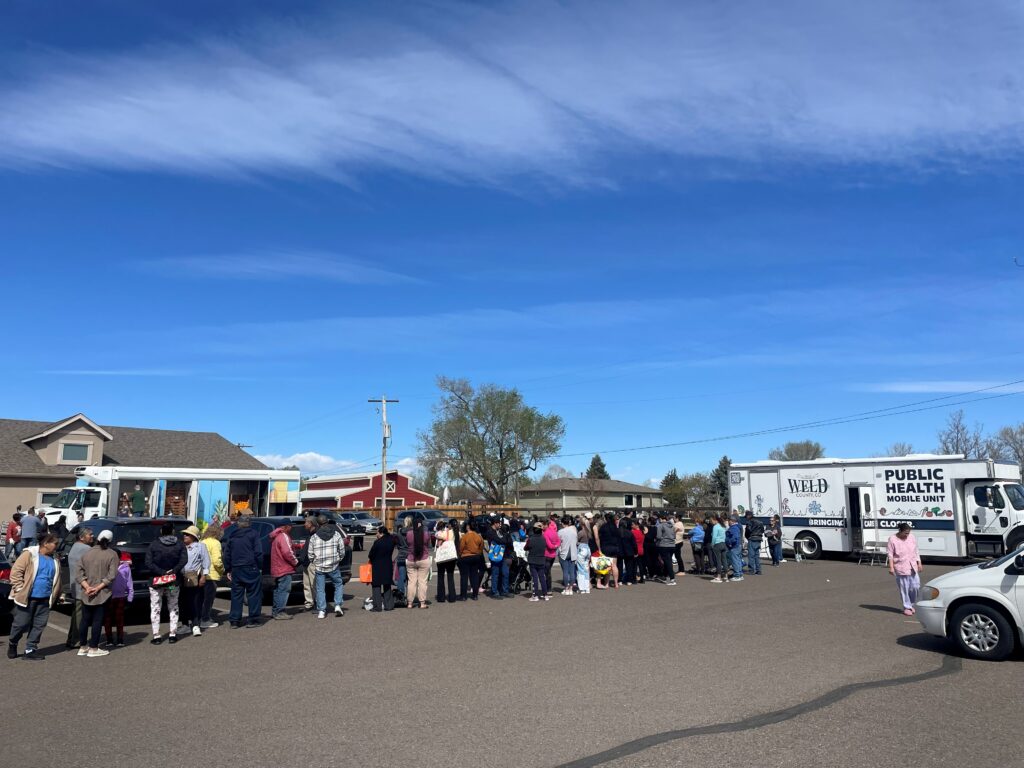
Now, in our second year, we are being much more intentional. We are really leaning into partnerships with organizations people already trust, like food banks, schools, and libraries. For example, working alongside mobile food distributions has been really effective. People are already going there, they feel comfortable, and those are often the communities we are trying to reach.
We have also partnered with schools for back-to-school immunization events and are exploring ways to work alongside rural bookmobiles and other outreach programs that are already reaching those communities.
Trust is probably the hardest part. It takes time. You cannot just show up once and expect people to come. A lot of this work is about consistency and being present in the same spaces over time.
“The mobile unit is just like public health at its finest. It’s where we’re actually going out to the communities and bringing our services to them and meeting people where they are.”
– Shanti Sanchez, CPR News Article
4. What has been most challenging, especially in rural areas?
Shanti Sanchez:
There are definitely logistical challenges. Distance is one. Weather is another, especially in the winter, when it is not always safe to take the mobile unit out to more rural areas.
But beyond logistics, coordination is a real challenge too. There are other county agencies doing outreach, like food access programs or benefits enrollment, and we are often trying to reach the same communities. Aligning schedules and resources is not always easy, but it is something we are working toward. Because from our perspective, if we are already investing the time and resources to get out to a rural community, we want to make that visit count.
The goal is to bring multiple services together, healthcare, food resources, benefits support, so people can access what they need in one place.
5. How are you thinking about impact right now?
Shanti Sanchez:
We are still defining that.
Right now, we track the basics, number of sites, services, and people reached. But we know that does not tell the full story.
Impact looks different depending on where you are. If we are in a more populated area, we might see a higher volume. But if we go to a small rural area and only see a handful of people, that still matters. Those are people who may not have accessed care otherwise.
We are also trying to connect what we are doing back to what we have heard in community health assessments, making sure the services we are offering are actually responsive to community needs.
And then there are the moments you cannot quantify. We had someone come to the mobile unit just to pick up a hygiene kit. He was not interested in services at first. But he came back, asked questions, and decided to do a screening right as we were packing up.
He found out he was diabetic and said, “I never would have guessed that.”
We were able to connect him with follow up care and resources. That is the kind of impact that does not always show up in the numbers, but it is critical.
In an interview with Denver7, Shaun May, director of public health services for the Weld County Health Department, said each patient completes a survey after their visit. The results showed that 60% of patients received a service or treatment at the mobile clinic that they would not have received otherwise.
6. What changed after your first year running the mobile clinic?
Shanti Sanchez:
In the beginning, the focus was really on just getting the mobile unit out into the community and seeing how it worked. But what became clear over time is that access alone is not the full story. Where and how we show up matters just as much as the services we bring.
Now we are thinking much more intentionally about outreach. Instead of responding to requests as they come in, we are starting to focus on the communities where we know there are ongoing gaps, especially in rural areas.
We are also thinking more about coordination. If we are going into a community, we want to make that effort count by bringing as many relevant services and partners together as possible.
It has shifted from “how do we get out there” to “how do we make sure when we get out there, it really meets people where they are.”
What Public Health Departments Can Take From This
Weld County’s first year shows that mobile clinics are a way to extend the reach and impact of public health.
For departments considering this model, a few themes stand out:
- Address both access and awareness. Mobile clinics bring services closer while helping communities understand what is available.
- Design for engagement. A mix of clinical and non-clinical services creates more opportunities for people to connect.
- Build on pre-existing trusted partnerships. Community organizations help open doors and strengthen reach.
- Make every visit count. Coordinating multiple services in one place increases impact, especially in rural areas.
- Redefine impact. Success is not just about volume. It is about reaching people who might not otherwise access care.
- Show your impact. Capturing stories and experiences helps sustain and grow the program.
Weld County’s mobile clinic is part of the 2026 Mobile Health Map Accelerator Program, a national initiative supporting mobile clinics as they strengthen public health in their communities. The program helps teams share lessons, build evaluation capacity, and strengthen their impact in their communities.