Public Health Quality Tool for Mobile Clinics
Share this
A quick, evidence-based checkup for your mobile program
Mobile health clinics are on the front lines of access, meeting people where they are with care, education, and connections to services. The Public Health Quality Tool (PHQTool) is our free, online resource that helps your mobile clinic assess and strengthen the quality of that work.
Joining Mobile Health Map gives you access to this free, easy-to-use tool, designed specifically for mobile care.
What is the Public Health Quality Tool?
In 2009, a team of public health experts, including Dr. Howard K. Koh, former United States Assistant Secretary for Health and Dr. Peggy Honoré, former Director of the Public Health System, Finance and Quality Program, both at the U.S. Department of Health and Human Services, and Dr. Donald Berwick, former administrator of the Centers for Medicare and Medicaid Services, developed a framework for assessing the quality of public health services.
Using this framework and working with Dr. Honoré, we created the Public Health Quality Tool (PHQTool), a digital resource that helps mobile clinics assess the extent to which their programs are health promoting, proactive, transparent, equitable, effective, and efficient.
Built on national public health quality aims and co-developed with mobile clinic leaders, the PHQTool translates big ideas about quality into concrete, everyday practices you can measure and improve. Most clinics complete the assessment in under 30 minutes and walk away with clear priorities for the year ahead.
Read the research in the International Journal of Environmental Research and Public Health detailing how the PHQTool was designed and tested.
Why should our mobile clinic use this tool?
Evaluating quality is not about perfection. It is about making your existing work more visible, more intentional, and easier to improve.
Clinics using the PHQTool report that it helps them:
- Plan for ongoing improvement by turning everyday practices into measurable goals.
- Strengthen grant proposals and reporting with quality metrics.
- Build trust with communities and partners by showing how they track outcomes and use feedback.
- Create a shared language of quality among clinical, outreach, and administrative staff.
Taking time to evaluate your program is one of the most powerful ways to show patients, donors, and supporters that you are delivering the best care possible and that you are committed to getting even better.
What do these quality aims mean for mobile clinics?
Equitable
Health inequities are the unfair, avoidable differences in health between groups of people. An equitable mobile clinic pays attention to affordability, convenient locations, languages spoken, and staff diversity. These features improve the client experience and help ensure that the people who most need care can access it.
Health Promoting
Health promotion means advancing safe practices by both providers and clients. The PHQTool asks whether you provide health education and counseling, offer clinical services such as vaccines, and address social determinants of health like food, housing, and income. Clients should leave your clinic with practical strategies to care for themselves and a path to additional support.
Proactive
A proactive clinic stays on top of community health needs and responds quickly when they change. High quality mobile programs regularly review local health data, listen to client feedback, and adjust services and routes accordingly. Your clients will appreciate seeing their concerns reflected in your services.
Transparent
Transparency is about being open, honest, and reliable. Transparent programs track and share key information, such as operations, equity, outcomes, and finances, in ways that are meaningful to communities, partners, and funders. This builds trust and shows that your clinic is accountable for its impact.
Effective and Efficient
Effectiveness and efficiency go hand in hand: using the best available evidence to get the greatest health impact for the resources you have. The PHQTool encourages clinics to use evidence-based interventions, measure changes in knowledge, behavior, or health, and track costs and return on investment (ROI). This helps demonstrate that your mobile clinic is not only saving lives, but also saving money over time.
How does the tool work?
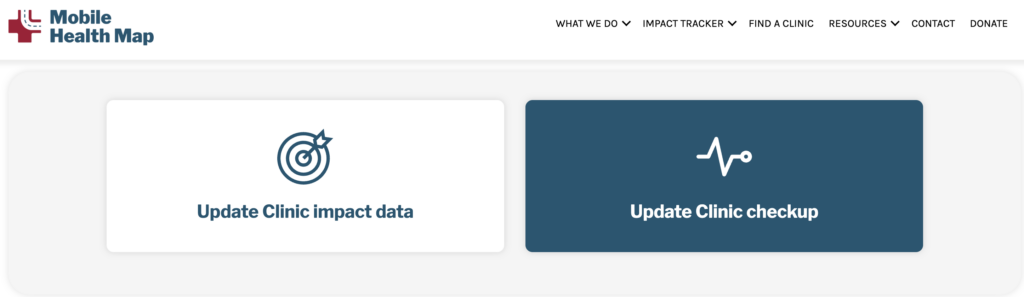
- Access the tool through Mobile Health Map.
The PHQTool is free for registered Mobile Health Map clinics.
- Complete a short self-assessment.
For each strategy (for example, multilingual materials, client surveys, cost tracking), you indicate whether you:
- Use it now,
- Plan to use it more next year, or
- Do not plan to use it in the next year.
- Review your quality snapshot.
See your strengths and gaps across the six aims and identify where small changes could have a big impact.
- Set concrete improvement goals.
Many clinics choose 1 to 3 priorities for the coming year, such as:
- Building a simple client feedback system,
- Improving site locations or outreach to advance equity,
- Starting basic cost and ROI tracking for funders.
- Repeat over time to track progress.
Taking the tool again each year turns it into a simple, built-in quality improvement cycle.
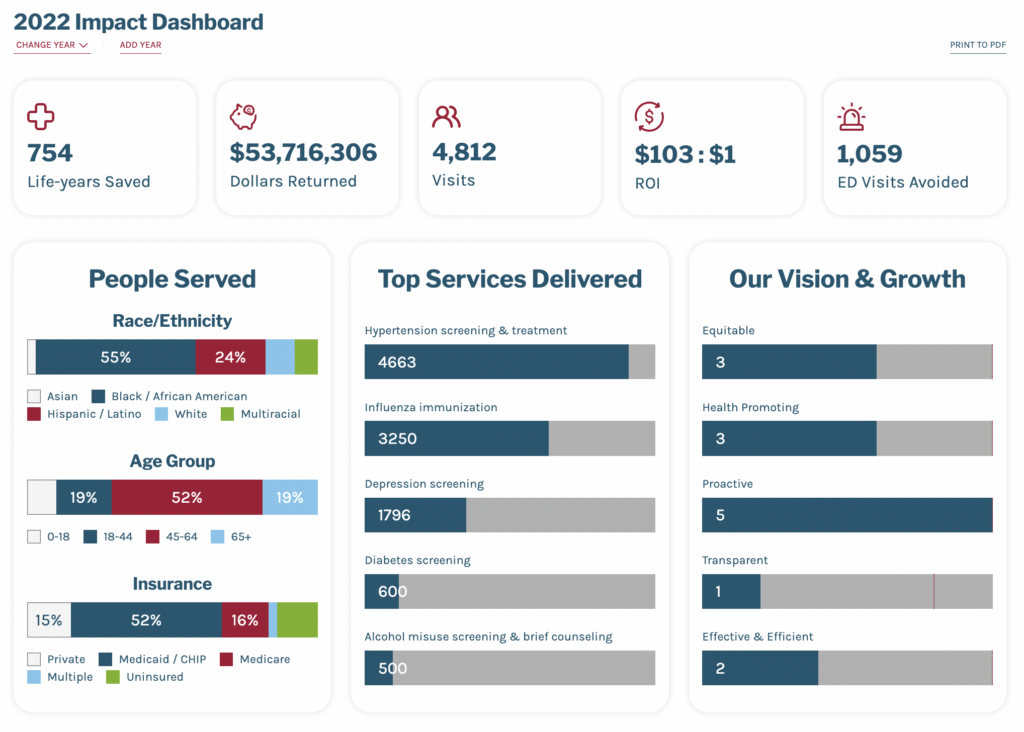
Evaluate and Share your Impact
Hundreds of mobile clinics contribute to Mobile Health Map’s growing evidence base. The Public Health Quality Tool is one more way to tell your story, document your impact, and advance health equity on wheels.
Add your clinic to Mobile Health Map and start your public health quality checkup today.